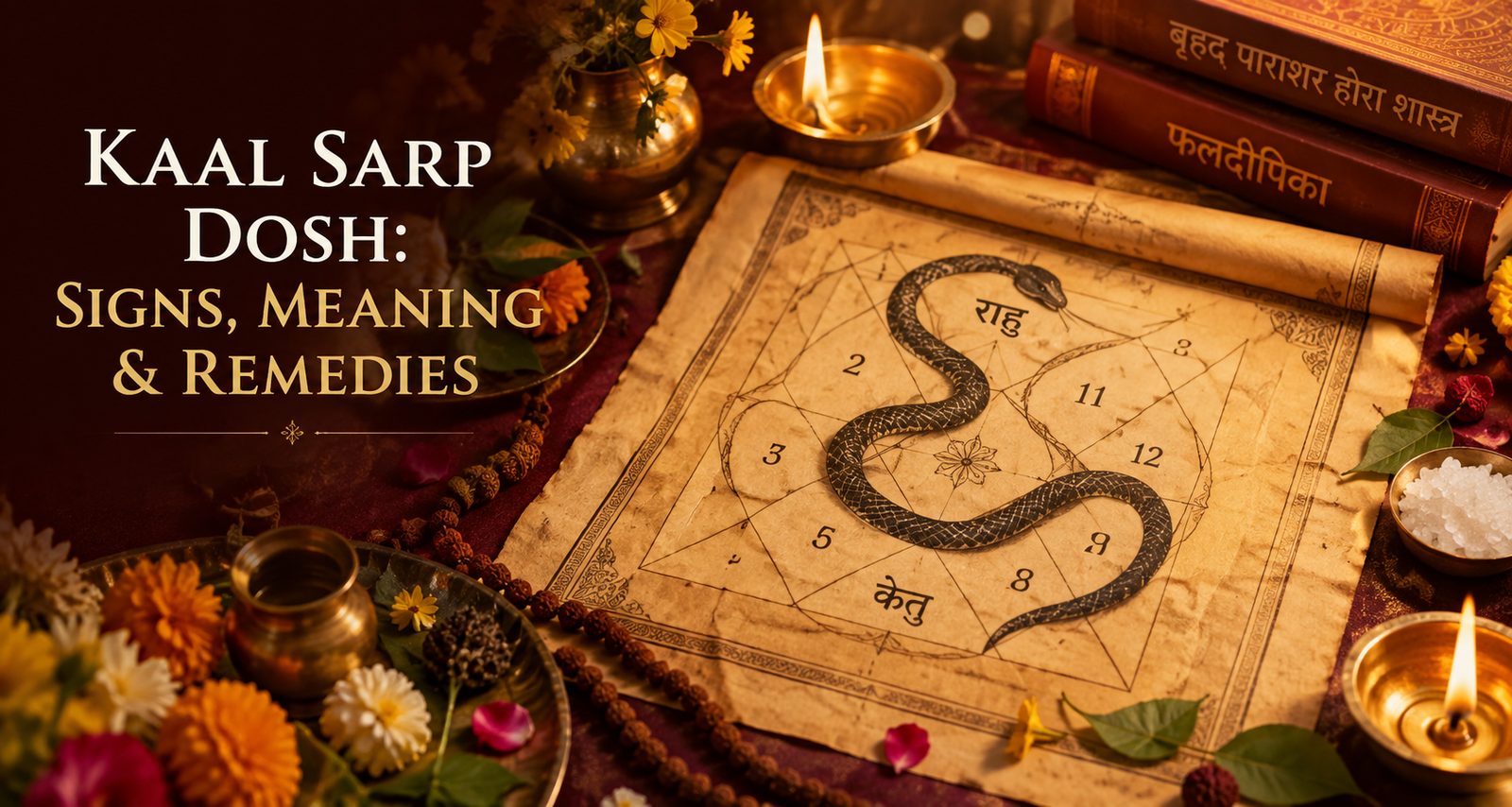
Kaal Sarp Dosh is one of the most talked-about doshas in Vedic astrology. It's said to form when all seven visible planets in a birth chart fall between Rahu and Ketu, creating a serpent-like formation believed to affect the native's fortunes.
How to Identify It in Your Chart
A qualified astrologer examines the placement of Rahu and Ketu relative to the other planets. There are twelve recognised variations of the dosh — Anant, Kulik, Vasuki, Shankhpal, Padma, Mahapadma, Takshak, Karkotak, Shankhchud, Ghatak, Vishdhar, and Sheshnag — each associated with different life areas depending on the houses involved.
Common Signs People Associate With It
- Repeated delays or obstacles despite consistent effort.
- A sense of anxiety or restlessness that's hard to pin down.
- Recurring setbacks in career, relationships, or health around similar life stages.
Remedies Commonly Recommended
The most widely recommended remedy is the Kaal Sarp Dosh Nivaran Puja, often performed at Trimbakeshwar or Ujjain, though it can also be conducted at home with the right samagri and Naga idols. Chanting the Maha Mrityunjaya Mantra, worshipping Lord Shiva on Mondays, and observing fasts on Nag Panchami are also popular practices.
A Balanced Perspective
Astrologers generally advise that a dosh in the chart is not a fixed sentence — remedies are meant to bring mental steadiness and support conscious effort, not replace it. A consultation with an experienced pandit can help you understand your specific chart before deciding on any ritual.